News
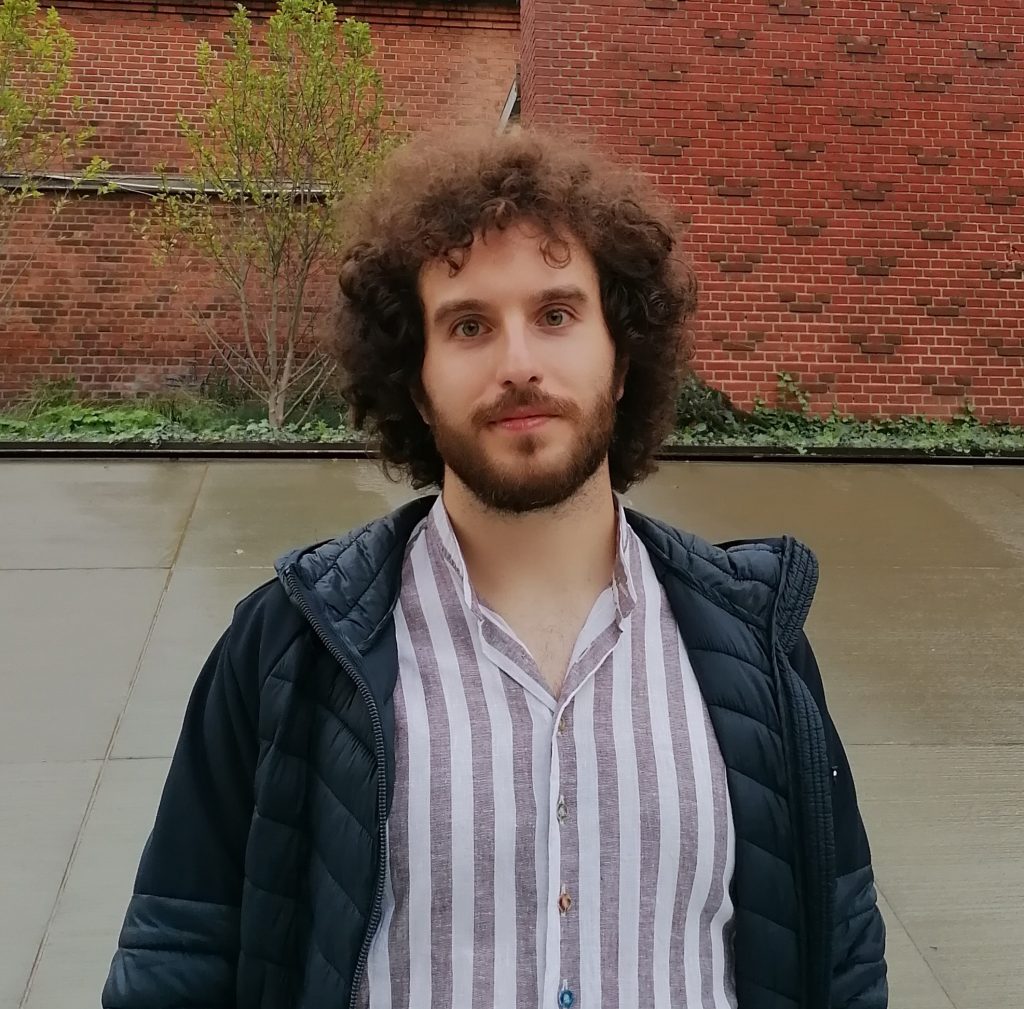
QIA highlights 2025 challenge winners, including Vaisakh Mannalath from Quantum-Safe Internet.
Two visions, one future: advancing the Quantum Internet and the role of Quantum-Safe Internet research
The development of the quantum internet continues to progress through a combination of theoretical innovation, simulation, and practical prototyping. A recent example of this momentum is the article published by the Quantum Internet Alliance (QIA), which presents two winning projects from its Quantum Internet Application Challenge. These works reflect two complementary directions in the evolution of quantum networks: infrastructure and future applications.
Both projects highlight how the scientific community is addressing, from different angles, the fundamental challenges of building the quantum internet of the future, from entanglement routing optimization to the design of query languages for distributed quantum systems.

More efficient quantum infrastructure: the work of Vaisakh Mannalath
Among the highlighted projects, the work of Vaisakh Mannalath, Doctoral Candidate in the Quantum-Safe Internet (QSI) program, stands out for its focus on one of the most critical challenges in quantum networks: efficient entanglement distribution.
His application, Quantum Networks with Minimum Cost Aggregation, explores how to improve quantum network performance using minimum-cost multi-path routing techniques. Instead of relying on a single transmission path, the system combines multiple routes to satisfy resource demands more efficiently.
This approach is crucial for future large-scale quantum networks, where optimizing resource usage will be essential to ensure stable, scalable, and secure communication.
As highlighted by QIA, Mannalath’s work offers a “clear, compact, and well-structured implementation,” demonstrating a strong understanding of routing principles in simulated quantum network environments.
Connection to the Quantum-Safe Internet project
Vaisakh’s work is part of the Quantum-Safe Internet (QSI) program, a European doctoral network dedicated to training researchers capable of designing communication technologies resilient to both classical and quantum threats.
His research aligns directly with one of the core goals of the project: developing protocols and architectures that enable communication networks resistant to future attacks enabled by quantum capabilities.
More information about the QSI program highlights its mission to train a new generation of PhD researchers in quantum-safe technologies, combining academic research with practical applications in advanced security and communications.
Two complementary visions of the quantum future
The QIA article emphasizes how the two winning projects represent two fundamental layers of the future quantum internet: on one side, efficient network infrastructure; on the other, the applications that will run on top of it.
In this context, the work of Vaisakh Mannalath embodies the essential but often invisible foundation of this ecosystem: optimizing the underlying infrastructure that will enable secure communication, precise synchronization, and new quantum-enabled services.
Towards a secure and scalable quantum internet
The convergence between initiatives such as QIA and doctoral training programs like QSI demonstrates that the development of the quantum internet is not only a matter of hardware, but also of algorithms, protocols, and security.
Research such as that of Vaisakh Mannalath represents an important step toward functional, efficient, and secure quantum networks, bringing closer the vision of a Quantum-Safe Internet capable of withstanding both current and future threats.
More info: Two Winners, Two Visions for the Quantum Internet – Quantum Internet Alliance