Testimonials
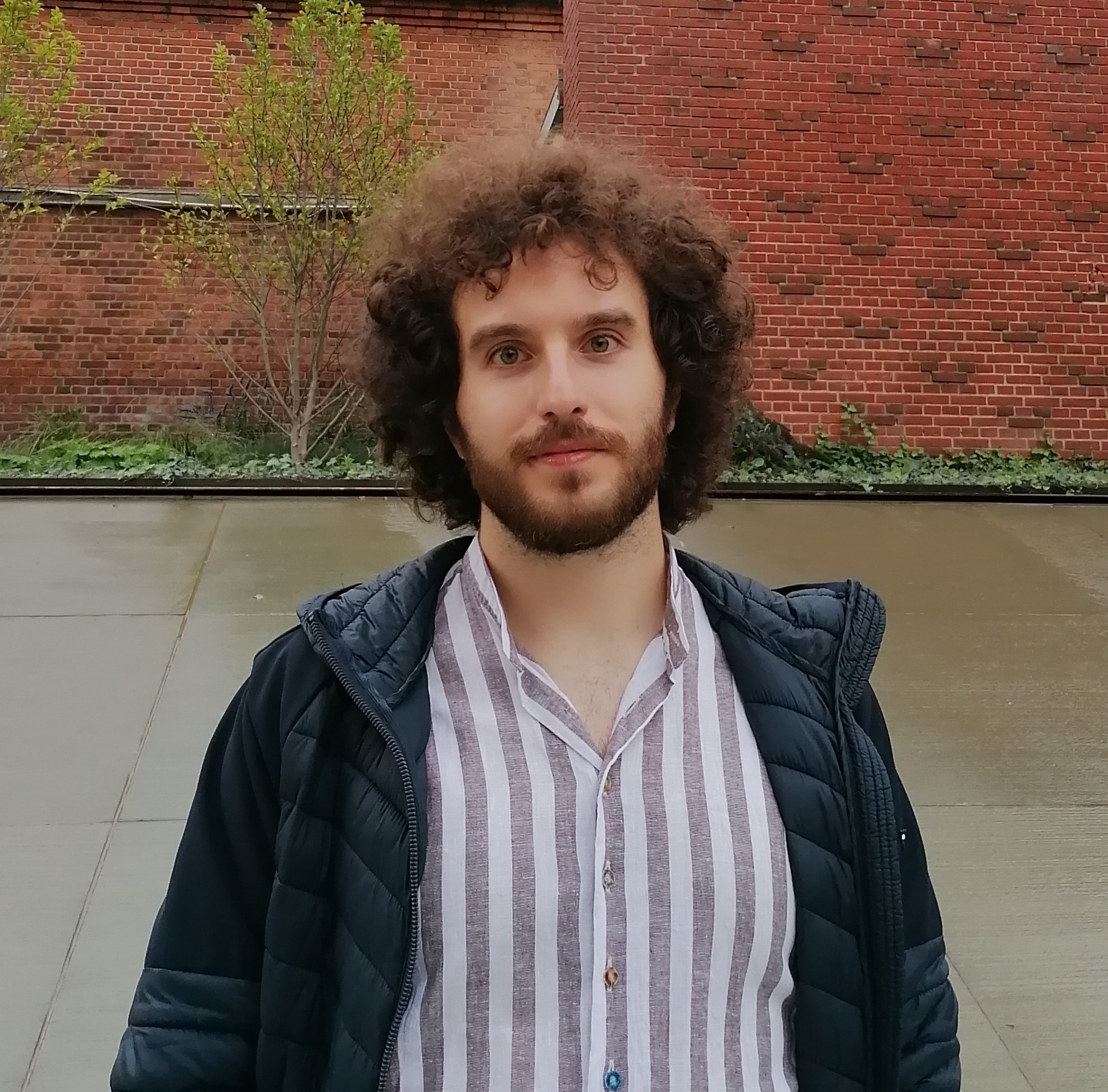
PhD Candidate testimonials, by Fabrizio Sisinni
Personal Growth
These three years have taught me a lot about myself. I have discovered that I am both more anxious and more proactive than I initially thought. At various points during my PhD, I doubted my abilities and my choices, but I always managed to come through those moments stronger, learning something from each experience. Of course, this growth is not solely my own achievement: it is also thanks to the people I had the pleasure and honor of working with, from my supervisor to those I met briefly at conferences.
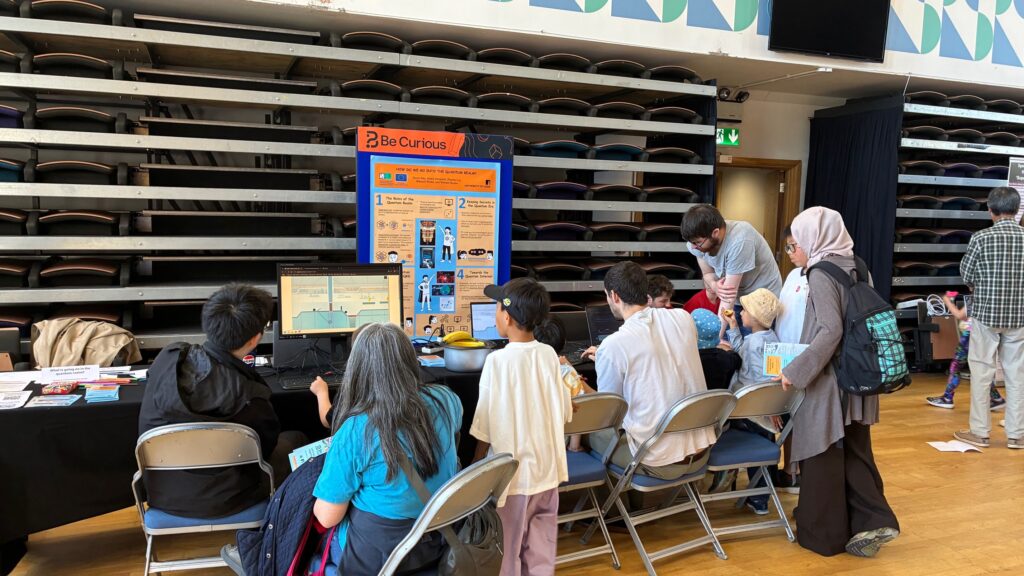
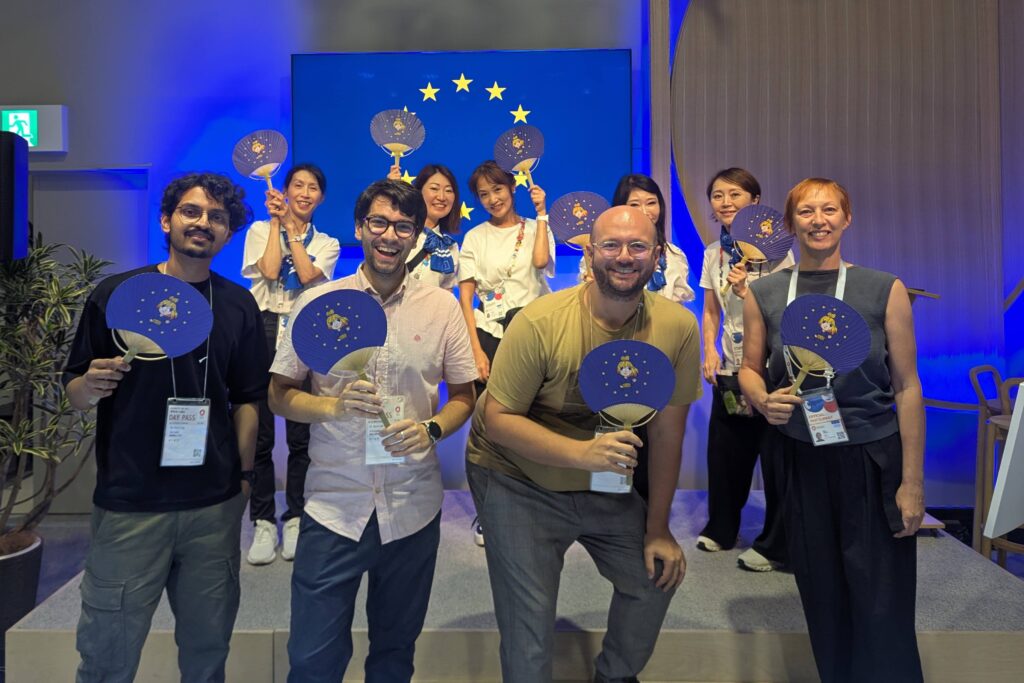
It has not always been easy, especially due to the many overlapping commitments, but I am grateful to the network for giving me the opportunity to travel, discover incredible places, and meet inspiring people from whom I have learned a great deal. It allowed me to experience cultures and environments very different from those I was used to, helping me to better appreciate what I have and not take anything for granted.
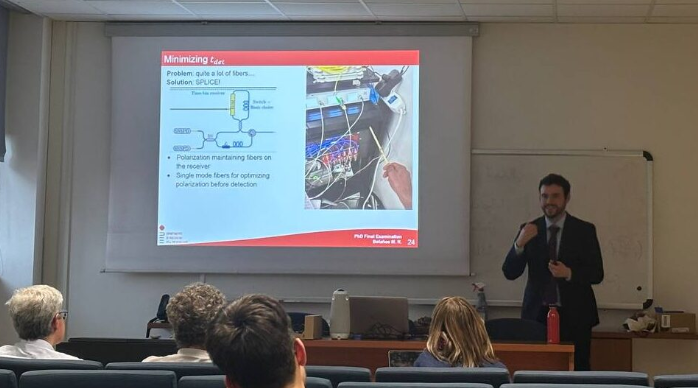
I have had many meaningful experiences that I will always carry with me: from the moment my first paper was accepted at a conference, to my first presentation in front of an international audience, to the opportunity to interact with people whose work inspired my own. Looking back, I can say that I have become a more confident and determined person. At the same time, I hope I have remained the same humble and respectful person I was when I first entered this field.
Professional Development
I began my PhD journey transitioning from theoretical mathematics to cryptography. I knew this would require significant effort even before being able to truly start doing research. This transition helped me recognize strengths I had previously taken for granted, while also highlighting some gaps in my academic background and learning methods. Interacting with other PhD students broadened my perspective and exposed me to a wider range of possibilities that I had not seriously considered before.
When I started doing research, the initial experience was not as exciting as I had expected. There were months of uncertainty, with little to no progress, and weeks spent working on ideas that ultimately did not succeed. However, this is an inherent part of research: one must keep trying until finding the right path toward solving a problem. I did not expect this kind of work to be so stressful, as it constantly requires putting one’s ideas and abilities to the test. At the same time, this is what makes every achievement especially rewarding. The satisfaction of accomplishing something after sustained effort, and of seeing one’s name on a paper, are among the most intense professional experiences.
This entire journey has allowed me to test my limits and gain a clearer understanding of my strengths as a researcher. These skills carry over into future work, enabling me to assess situations more quickly and understand what contribution I can bring to a project.
As one’s network grows, so does the workload. For this reason, it is essential to have a clear sense of what can realistically be achieved in the near future, also out of respect for collaborators proposing new ideas. I believe this is one of the most important lessons I have learned: respecting others’ time and effort. Accepting every opportunity without considering the time and energy required can negatively impact others’ work. As a result, I have learned the importance of maintaining clear and effective communication.
Looking back
Looking back, I have few regrets. There are situations I could have handled better and opportunities I could have made more of, but overall, I am satisfied with the choices I made and where they have led me. These have been intense years that have shaped me deeply. I have always been a shy person, and I probably still am, but I have learned that trying and failing is far better than not trying at all. I will face future challenges with a different mindset, with greater initiative and determination, whether they lead me to continue in academia or take me in a different direction.
By Fabrizio Sisinni